Scroll to read
By Navisha Bechan-Sewkuran, Ex-Mondelēz International, Sub-Saharan Africa.
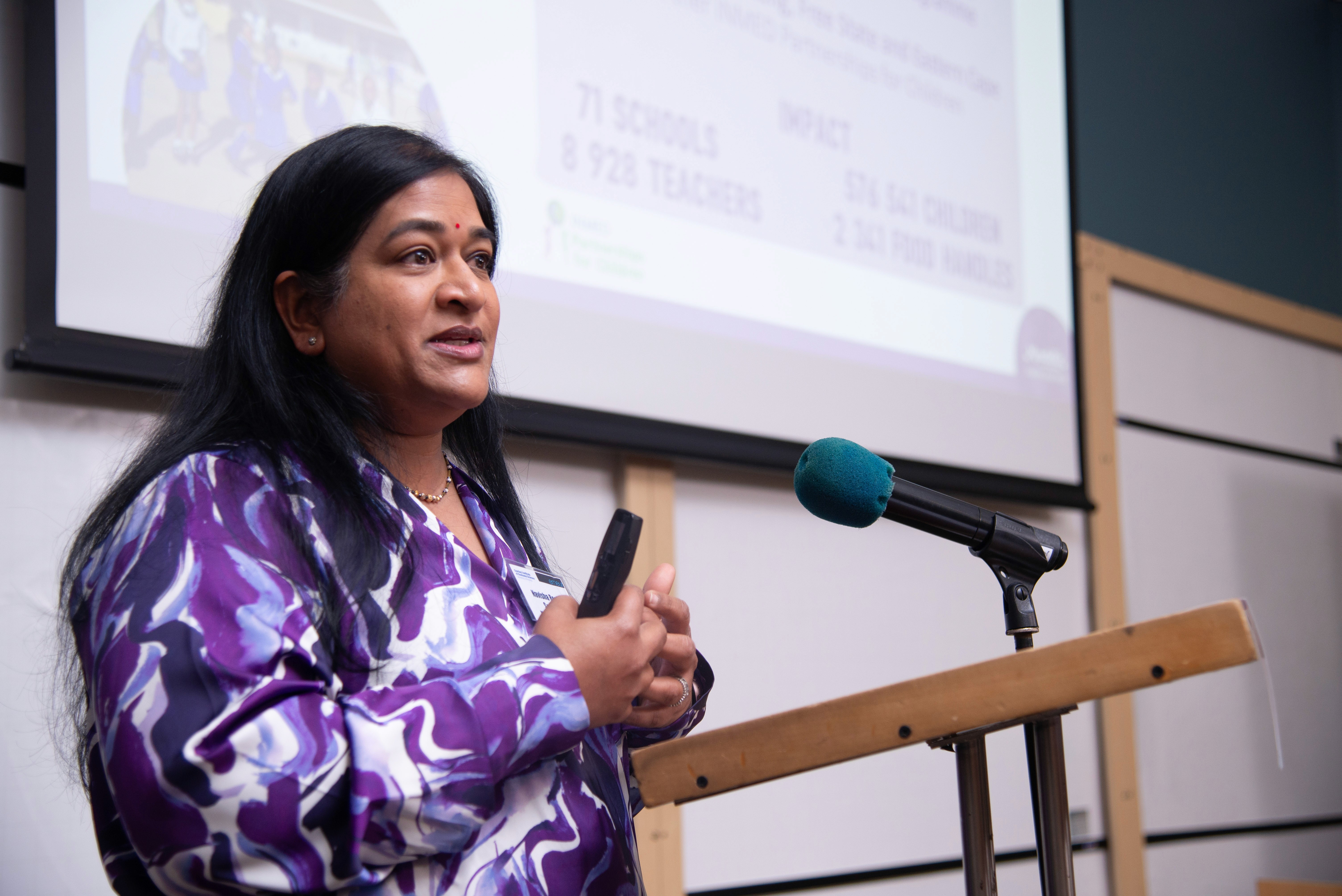
At a forum like this, it’s easy to see us as competitors. But we have come together as human beings, united by a desire to do good. At Mondelēz International, our business is snacks. We are the company behind Cadbury Dairy Milk, a brand that has been part of South Africa’s heritage for 85 years, and local favorites like Lunch Bar and Chappies. We make snacks for life’s moments of joy, connection, and indulgence, and we won’t apologize for that. But with that comes a profound responsibility. Our purpose is not just to make snacks, but to empower people to “snack right,” which means making our products the right way and championing mindful consumption.
A Holistic Approach to Childhood Health
We recognized that to truly make an impact, we had to address the complex health challenges facing our nation’s children. This led to the creation of our "Health in Action" program, a long-term, holistic initiative implemented in schools across Gauteng, the Eastern Cape, and the Free State. We knew a single-focus program wouldn't work. Instead, we built it on three interconnected pillars:
Nutrition Education: We partnered with the Department of Basic Education to develop a fun, engaging curriculum that integrated lessons on good nutrition into subjects like languages and life orientation.
Access to Fresh Food: Education is meaningless without access. We helped build or enhance school gardens and, most innovatively, established commercial aquaponics farms whose fresh produce and protein were channeled directly into the schools’ feeding programs.
Active Play: To combat sedentary lifestyles, we worked with unemployed youth from local communities, training them to support teachers in getting children moving again.
The Power of Data-Driven Impact
We were determined that this would be more than a feel-good story; it had to deliver measurable results. Over the program's seven years, we conducted baseline, midline, and endline surveys to track our progress. The data was astounding. We positively impacted over half a million children in 71 schools. More importantly, we saw a 20% drop in overweight children and a 77% reduction in childhood wasting—a condition where children are dangerously underweight. We saw a tangible shift towards a healthier, more normal BMI. This proved our holistic approach was working.
From Giving to Seeding: Aquaponics as a Catalyst for Change
Our work with "Health in Action" inspired a company-wide shift in our approach, from traditional corporate giving to a model we call “Sustainable Futures.” Instead of just donating, we now seek to seed-fund and partner with communities to tackle their key challenges from the ground up.
Our aquaponics farms are a prime example. This technology, which combines fish farming (aquaculture) with soil-free plant growing (hydroponics), is a perfect solution for drought-stricken areas like the Eastern Cape. It uses minimal water and electricity—which we are able to source from the sun—and produces both vegetables and much-needed protein in the form of fish. I recently watched a video of one of our farm leaders, who said that for the first time, people in his community now have access to fresh fish and organic vegetables. That is the human result of a sustainable investment.
Securing Our Source, Empowering the Farmer
Our responsibility extends globally, right to the source of our most iconic ingredient. Without cocoa, there is no Cadbury. Our “Cocoa Life” program is a decade-long, major global investment into the cocoa-growing regions of West Africa, which supply two-thirds of the world’s cocoa. This program isn't just about securing a supply chain. It’s about working directly with farmers to protect the land, increase their crop yields and income, create opportunities for them in the off-season, empower women in their communities, and protect children. It is a commitment to ensure the very foundation of our business is ethical, sustainable, and empowering.
From a farm in Ghana to a school in Gauteng, our mission remains the same. The moment of joy from a snack and the long-term well-being of the communities we serve must always go hand-in-hand. That is what it means to snack right.
This article has been adapted from Navisha’s original presentation at the fourth installment of the Impact Series, which addressed the topic, “Corporates As A Force For Good In Communities.” The full presentation is available on Thinkerneur’s YouTube page - see link here.